×

The Standard e-Paper
Home To Bold Columnists





Audio By Vocalize
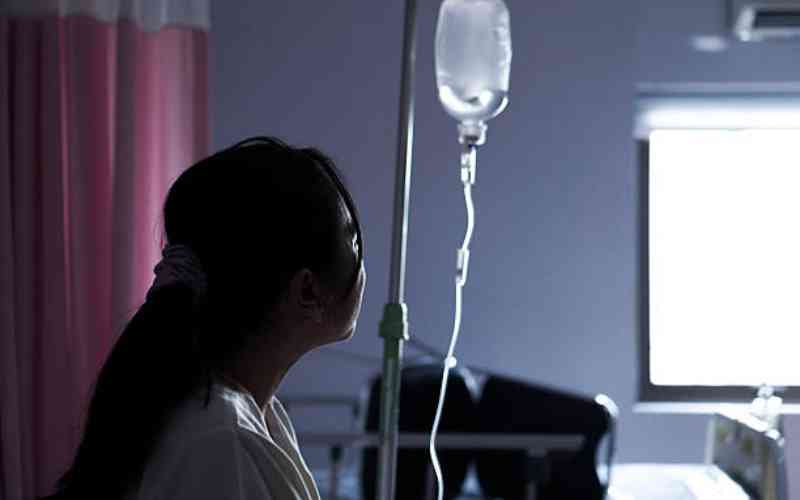
For years, discussions on sickle cell disease have centred on pain, blood transfusions and survival. But a bigger crisis is how women living with the condition face realities of dating, contraception, menstruation and motherhood.
Dressed in a flowery dress with red lipstick, 33-year-old Michelle Omulo sits under a tent at Gertrude’s Children’s Hospital in Nairobi. She is attending the inaugural International Sickle Cell Symposium alongside researchers, healthcare professionals, and fellow advocates.
As a filmmaker and founder of the West Kenya Sickle Cell Organisation, Omulo’s journey has been defined by resilience. Yet, like many women her age, she has harboured simple dreams: falling in love, getting married, and raising children.
For Omulo, however, those dreams have consistently collided with stigma, fear, and rejection.
"Each time I gather the courage to tell a man I am dating about my condition, the relationship quietly fades away," she says. "The calls reduce. The messages stop. Eventually, they disappear." When she asks why, the answer is always a polite, rehearsed excuse: "I’m just busy."
Diagnosed at Kenyatta National Hospital at three years old, Omulo describes her 30 years with sickle cell as a "bittersweet journey" marked by physical agony and societal prejudice.
Sickle cell disease (SCD) is an inherited blood disorder where red blood cells become rigid and crescent-shaped instead of round and flexible. These misshapen cells block blood flow, causing severe pain episodes (vaso-occlusive crises), anemia, frequent infections, and long-term organ damage.
A child inherits the disease when both parents carry the sickle cell gene. If both parents have the sickle cell trait (AS), each pregnancy carries a 25 per cent chance of producing a child with normal hemoglobin (AA), a 50 percent chance of a carrier child (AS), and a 25 per cent chance of a child born with sickle cell disease (SS).
"People simply don’t understand sickle cell disease. In school, we only learned about it briefly and moved on. I haven't had sex because I believe in waiting until marriage — but whenever I disclose my condition, men disappear."
As a child, Omulo's yellow eyes, a sign of jaundice caused by the rapid breakdown of red blood cells, made her an instant target for cruel assumptions.
"Classmates asked if I was contagious or constantly ill. Even some teachers didn't understand," she recalls. Her mother, a primary school teacher, constantly intervened to protect her from strenuous manual labor.
High school presented greater hurdles. To manage her health, Omulo attended a day school with a medical exemption note, but absenteeism drew hostility. "Whenever I requested permission to seek treatment, teachers would say, 'You're always sick.' By Form Two, I was so mentally disturbed I had to transfer."
When she reached university, Omulo avoided romance entirely, believing no one would want a partner with a chronic illness. That fear has persisted into her thirties. Despite pressure from past suitors, Omulo has remained abstinent due to her Christian faith, holding on to her dream of starting a family within marriage. But the sudden departures continue. "People simply don't understand the disease," she says.
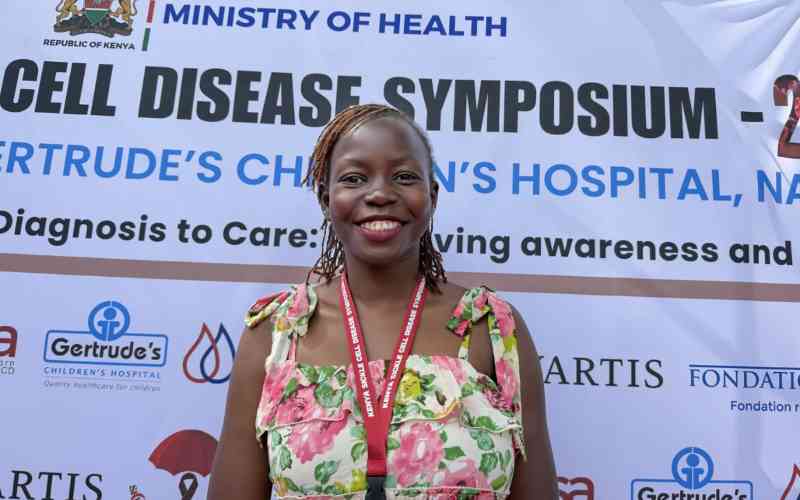
For 31-year-old Nicole Achieng', navigating sickle cell meant uncovering an identity her family initially shielded her from.
"My parents tried to protect me," Achieng' says. "I knew I spent more time in the hospital than my friends, but I didn't understand why until we covered genetic disorders in primary school science class. That’s when I realised: This is what I have."
Puberty brought a drastic turn for the worse. Hormonal fluctuations triggered frequent, severe pain crises, particularly during her period. "My periods disrupted my day-to-day life," she says. "I was also a late bloomer and missed out on normal teenage experiences."
Achieng’s experience aligns with medical research. A 2025 study published by the American Society of Hematology found that women with sickle cell disease experience elevated inflammation during the follicular phase of their menstrual cycle, making them far more susceptible to painful vaso-occlusive crises around their periods. The study noted that nearly half of women with SCD report pain clustering around menstruation, contributing to higher overall pain rates during their reproductive years compared to men.
The findings further suggest that menstrual hormonal changes may play a significant role in triggering these episodes, underscoring the need for more specialised reproductive healthcare for women living with the condition.
Now an advocate sharing her life on TikTok and Instagram, Achieng' has made a conscious choice not to have children — a decision driven by her health realities.
"That decision narrowed my dating circle," she adds. "When I started dating, I used to hide my diagnosis. Now I am open, but the common response is pity. They don't see you as a person; they see you as a condition. For a long time, I wondered if I was even datable."
The emotional weight of reproductive choices isn't borne by women alone. Comedian Mannerson Oduor, popularly known as Akuku Danger, candidly shared his experiences at the Nairobi symposium.
"I saw how much I drained my parents emotionally and financially," the 36-year-old survivor recalls. "My childhood was not fun. Back in the village, neighbours even rumored that I was bewitched because they couldn't understand the illness."
Those lingering memories led Akuku Danger to make a permanent decision in adulthood: he chose to get a vasectomy to avoid passing on the burden to another generation.
"To spare my children the pain I endured, I decided to have a vasectomy," he says. "I didn't want another child to go through what I went through."
Despite the daunting odds, specialists emphasise that motherhood is entirely achievable with proper clinical intervention.
According to gynaecologist Dr Dennis Miskellah, modern medicine has transformed survival rates. "Previously, patients rarely lived past childhood. Now, we are seeing older folks choosing to carry healthy pregnancies," he explains.
Dr Miskellah advocates for compulsory preconception counseling, particularly in high-prevalence areas like the Coast, Western, and Nyanza regions.
"We don't screen couples so they break up," Dr Miskellah clarifies. "We screen so they can prepare. Couples can consider options like IVF with pre-implantation embryo screening to avoid passing on the gene entirely."
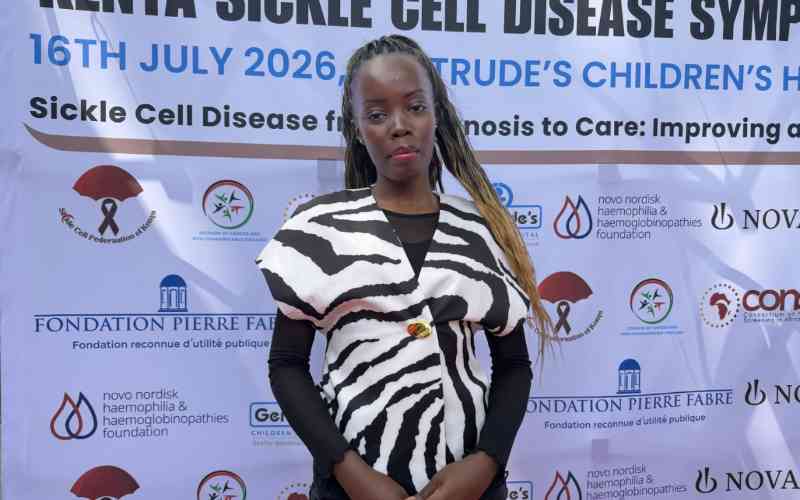
For women with SCD who choose to conceive, medical management must begin long before pregnancy. The gynaecologist explains that beyond optimizing baseline hemoglobin levels to bolster overall health, patients must maintain strict adherence to hydroxyurea, stay well-hydrated, and ensure their vaccinations are up to date.
“Specialist care also involves thorough cardiac evaluation to ensure an anemia-enlarged heart can handle the increased blood volume of pregnancy,” he says.
He further adds, once expectant, mothers require specialised high-risk antenatal care to monitor organ function, manage blood sugar, and protect placental health against risks like pre-eclampsia and fetal growth restriction.
"When pain crises occur, we treat them without hesitation," says Dr Miskellah. "We can safely use opiates, including morphine when necessary, while addressing underlying triggers like dehydration or infection."
Delivery, he stresses, must take place in Level 4 or Level 5 hospitals equipped with operating theaters, blood transfusion facilities, and specialist support. "These are not pregnancies to deliver in local health centers with standard nursing staff," he warns.
Dr Miskellah also addresses systemic gaps, acknowledging that lower-level facilities often lack specialised equipment, lab capacity, or staff training. "The sad reality is that many facilities operate on a bare-minimum budget, with little preparation when high-risk complications arise."
"One of the biggest challenges is stigma. Many people wrongly believe that women living with sickle cell cannot marry or have children. Genetic counseling doesn't tell people whom to marry, it equips them to make informed choices that align with their values."
Fiona Obanda, a genomic scientist and genetic counsellor with the Sickle Cell Federation of Kenya, notes that fear usually stems from a basic misunderstanding of genetics.
"People often assume that if a couple's first child is born healthy, the next one will automatically have sickle cell," Obanda explains. "Genetics doesn't work that way. Every single pregnancy carries the exact same 25 per cent probability."
She cautions against relying on basic hemoglobin tests alone. Rare inherited blood disorders, such as beta-thalassemia, can remain hidden during routine screenings.
"A person might look like they have normal hemoglobin (AA), but carry another hidden trait that only specialised interpretation can spot," Obanda says. "That is why testing must be paired with expert genetic counseling."
Prof Constance Nalianya Tenge a Paediatrician and Associate Professor of Paediatrics at Moi University School of Medicine speaking at the symposium, highlighted the gap in specialised reproductive care for young women.
"Girls living with sickle cell face the same peer pressure, emotional desires, and relationship dynamics as anyone else," Prof Tenge says. "They need accurate contraception counseling and supportive healthcare, not pressure to prove their fertility through unsafe pregnancies."
While individual stories highlight personal resilience, healthcare leaders warn that systemic failures continue to cost lives across Kenya.
Speaking at the symposium, organised by the Sickle Cell Federation of Kenya, Gertrude’s Children’s Hospital, the Ministry of Health, and the American Society of Hematology, Dr Robert Nyarango, CEO of Gertrude’s Children’s Hospital, painted a stark picture.
An estimated 14,000 infants are born with sickle cell disease in Kenya annually. Yet, due to the absence of a universal newborn screening program, thousands go undiagnosed until fatal complications arise.
"In developed nations, early diagnosis allows over 90 per cent of children with sickle cell to live past age five, with many reaching their fifties," Dr Nyarango said. "In sub-Saharan Africa, fewer than 50 per cent survive past their fifth birthday, and average life expectancy remains around 25 years."
Dr Nyarango urged the government to integrate universal sickle cell screening into initial routine vaccination visits and ensure consistent supplies of disease-modifying drugs like hydroxyurea across public hospitals.
He welcomed the inclusion of sickle cell management in the Social Health Authority (SHA) benefits package, while announcing a major medical milestone: Gertrude’s Children’s Hospital is preparing to launch Kenya’s first pediatric bone marrow transplant unit.
"Families currently spend millions traveling to India or South Africa for curative bone marrow transplants," Dr Nyarango said. "Establishing this specialised unit locally will lower costs and ensure accessible follow-up care."
Beyond the physical pain, the condition exacts a heavy financial and productivity toll on families. Speaking at the symposium, Dr Gladwell Gathecha, Head of the Division of Cancer and Non-Communicable Diseases (NCDs) at the Ministry of Health, highlighted that a major portion of the economic burden stems from caregiver productivity loss rather than direct medical costs alone.
"For sickle cell, a massive chunk of the economic burden comes from parents and caregivers missing work to take warriors to appointments or stay with them during hospital admissions," Dr Gathecha explained. "When we look at the national development agenda, prioritising sickle cell care becomes crucial, we need healthy citizens to build the economy."
Current Ministry estimates indicate that approximately 250,000 Kenyans are living with sickle cell disease, concentrated primarily across 17 high-burden counties in the Lake, Western, and Coastal regions.
2Confirming the government’s commitment, Ministry of Health Principal Secretary for Medical Services, Dr Ouma Oluga, stated that the Ministry is actively working to integrate universal newborn screening, early diagnostic capabilities, and commodity supply chains directly into the primary healthcare framework.
For women like Michelle Omulo and Nicole Achieng', institutional reforms are vital, but social empathy is equally urgent.
"Sickle cell is a condition people can live with into old age," says Dr Miskellah. "These women deserve to live their lives fully, unapologetically, and free from stigma."
Subscribe to our newsletter and stay updated on the latest developments and special offers!